
Insights
Ideas have more potential when you share them. Here are some of ours.

Uncovering – Essay for the Council for the Advancement of Standards in Higher Education
This pandemic and its consequences has uncovered a lot about ourselves, our students, and our institutions. We must learn from these discoveries.

What is Change for Learning?
The current culture of teaching and learning in academia is not powerful enough to support true higher learning for students. We must put students first.

Working with Higher Education “Consultants”
Working with Keeling & Associates, LLC means you’re working with agents of change. We’re not your typical higher education consultants.

No Silver Lining: The Pandemic and Higher Education
There will be no going back to normal for higher education institutions post-Covid-19 pandemic. How will we support students—all students—and make it possible for them to take full advantage of what our colleges and universities can provide?

Working Differently: Saving Lives Matters Most
Keeling & Associates, LLC, like our clients and colleagues across higher education, is adapting the way we do things in response to COVID-19. Preventing or slowing the transmission of the new coronavirus is all of our responsibility; saving lives matters most.

Measuring What Matters: “Big Data,” Data Analytics, and Student Success
Data and analytics often help senior leadership at higher education institutions understand students better. But to truly put students first, leadership must go beyond data and uncover student stories.

Higher Learning Through Poetry
As ethical practitioners and educators, we must leave no student’s confusion to themselves; we work, and work hard, to discover ourselves, academic credit or no, tenure or no, quantifiable results or no.

Cultivating Humanity: the Power of Time and People The Journal of College and Character
To cultivate humanity is to invest in, enrich, or elevate all that it is to be human. But cultivating humanity has become a pressing challenge in higher education, because learning about what it means to be human depends on significant and ongoing personal engagement of students with faculty and staff who serve as mentors, advisors, and guides. Such engagement is as expensive as it is essential; time and people are money. It should not be true that there is enough time and enough faculty and staff to cultivate humanity only in colleges and universities that have a lot of money. What students most need, and what cultivating humanity most requires, is the hardest thing for institutions of higher education to provide, and for observers and stakeholders of colleges and universities to understand and support. But what students learn about themselves, others, and the world around them is as important to their future success as getting the degree. Character, empathy, and moral principles make the graduate a whole person, not just an individual with a credential. Colleges and universities must settle for nothing less. I What we mean by “humanity” — when we refer to certain qualities of a person, [...]
We Stand for Justice: In Response to Charlottesville
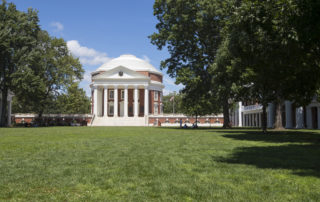
Keeling and Associates, LLC, a higher education consulting services firm stands with Charlottesville. Black Lives Matter.

The State of Higher Education in 2017: Student Affairs Must Put Students First
The idea of higher education as a public good is challenged. We must cultivate humanity at the senior leadership levels at colleges and universities to engage, support, and advance student learning.

An Ethic of Care in Higher Education: Well-Being and Learning
Institutions and Persons We too easily lapse uncritically into thinking of institutions of higher education—or, for that matter, of institutions of any kind—as mechanical things, machines, or objects; we lose our essential awareness that institutions and their organizational elements (e.g., schools, divisions, sectors, departments, programs) are structured communities of people. “The administration,” for example, is not some robot or technology; it is a group of human beings, large or small, that has responsibility for certain management tasks and decisions. By saying “the administration,” we intentionally (though thoughtlessly) transform our perception and understanding of those people from a group of living, real human beings into a thing—removing, in the process, the elements of humanity that pertain to the people involved. This use of impersonal organizational terms allows us to make claims against those people as “the administration,” without considering their fundamental human characteristics and feelings. Sometimes we use “students,” or “the students,” in the same way; “the students,” like “the administration,” become a mass of something, losing not only their individuality but also their humanness in the translation. Consideration of relationships between “the students” and “the administration” (or “the college,” or “the university”) is then fraught with the dual dangers [...]

Learning as Transformation: Resourcefulness and Renewal in Higher Education
T he promise of transformation differentiates the purposes of liberal education from those of more mundane—and commonly overrated—cognitive activities such as memorizing, out-of- time and therefore just-in-time studying, and cramming to pass exams. Embedded deeply in the idea of college as a learning experience is the belief that the person who graduates should be somehow different from the one who first matriculated—and different in more ways than merely having a degree, or, for that matter, a job. No institution of higher education that is conscious of its own potential would write a mission statement that said its purpose is to graduate students or grant degrees. The point of controlling access to a valued (even if no longer scarce) credential such as a baccalaureate degree is that the credential must be earned, because it represents something that cannot—and should not—be simply purchased. Even universities that have suffered (and, unfortunately, encouraged) the assaults of a consumerist view of higher education would dispute any assertion that their degree is a product, the eventual ownership of which is guaranteed through the timely payment of tuition and fees. Learning: Liberal and Transformative C ollege should be about learning—and learning may, but may not, correlate [...]